Clearview Anti-Reflective Screen Protectors
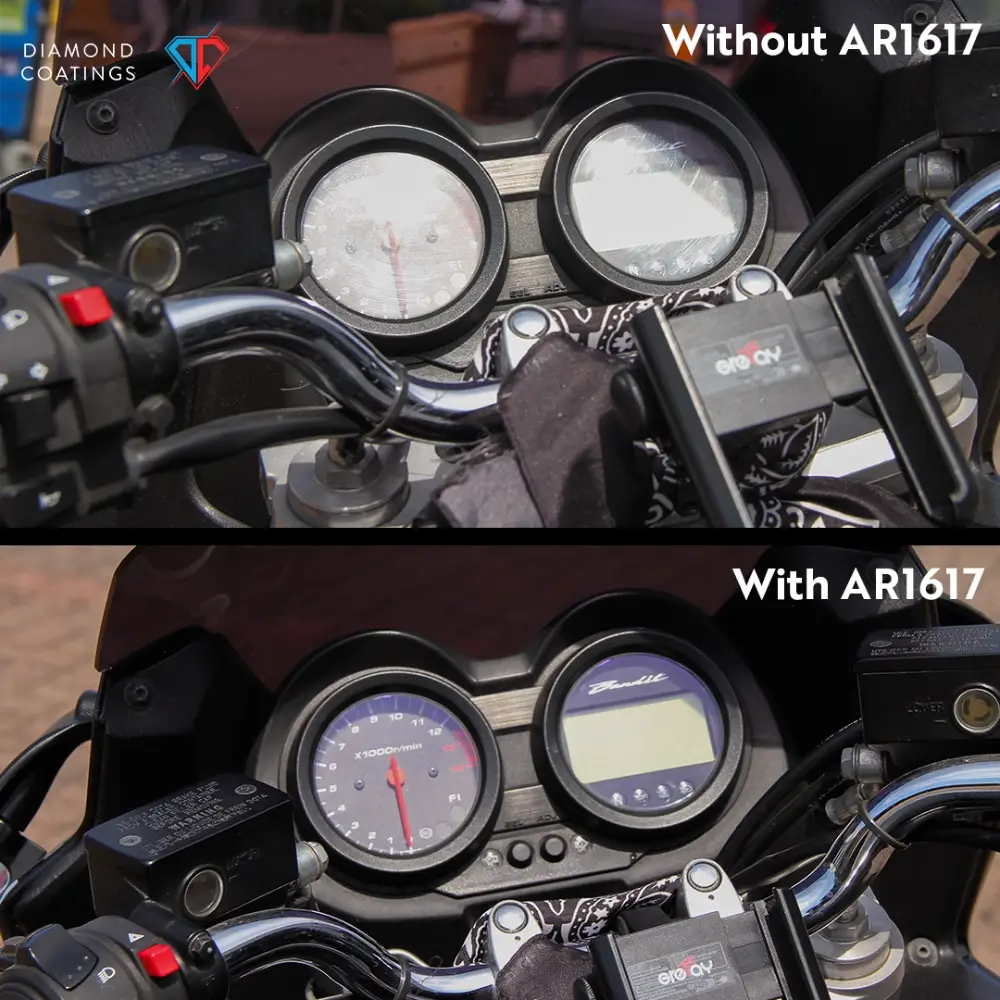
Our Clearview Anti Reflective Screen Protector range is designed to reduce distracting reflections while maintaining excellent screen clarity.

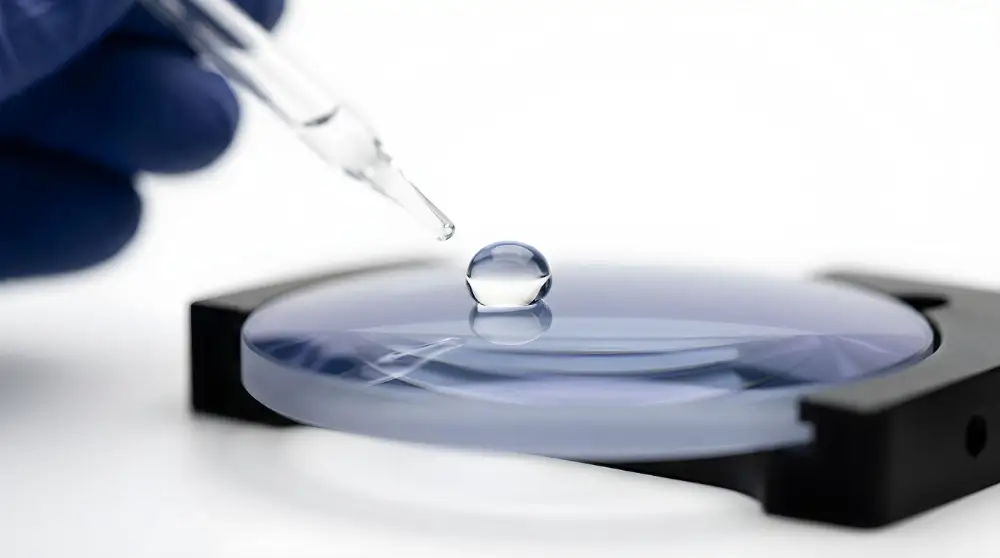
Water and moisture can have a significant impact on the performance, appearance and durability of materials, products and components. On optical and electronic components in particular, water droplets, condensation and surface contamination can interfere with visibility, operation and routine cleaning.
Hydrophobic coatings provide a way to manage these challenges by changing how a surface interacts with water. Rather than allowing water to spread across the surface, the coating encourages it to form droplets, helping water move away more readily and reducing the tendency for the surface to become wetted.
But how do hydrophobic coatings work, what benefits can they provide, and which applications are best suited to this type of surface treatment?
A hydrophobic coating is a thin surface treatment designed to repel water. The term “hydrophobic” means ‘water-fearing’ and describes a surface that has a low affinity to water.
Hydrophobic coatings work by modifying the properties of the surface to which they are applied. Once treated, the surface has lower surface energy, influencing the way water molecules interact with it.
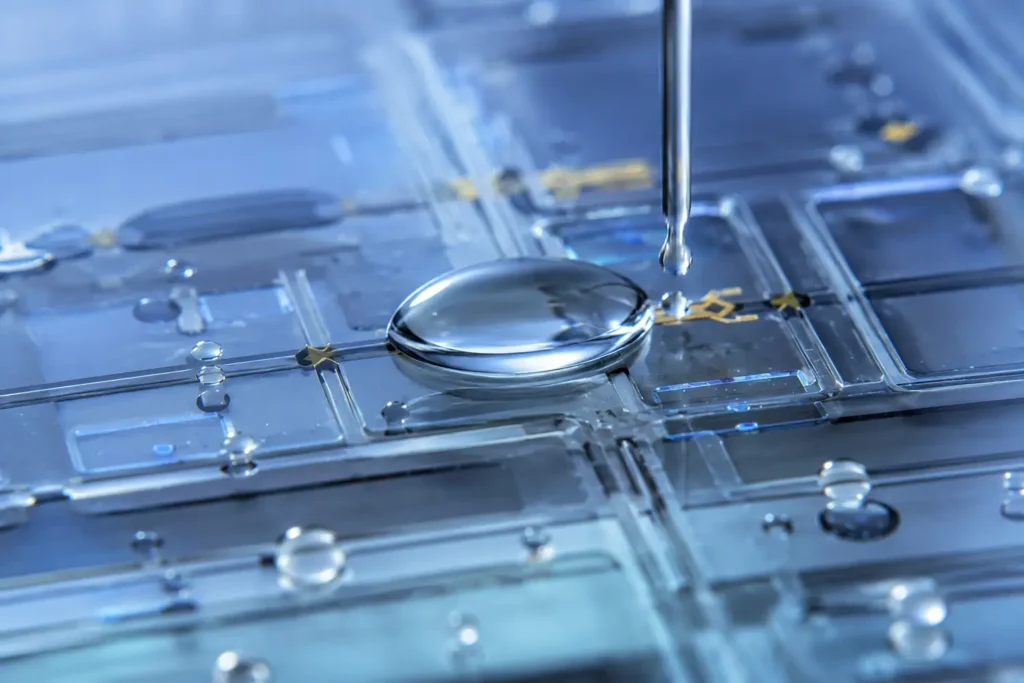
Water molecules are naturally attracted to each other. On a hydrophobic surface, the attraction between water molecules is stronger than the attraction between the water and the coated material. This means that, instead of spreading out to create a continuous film across the surface, the water pulls together and forms droplets.
This behaviour is responsible for the characteristic “beading” effect commonly associated with water-repellent surfaces.
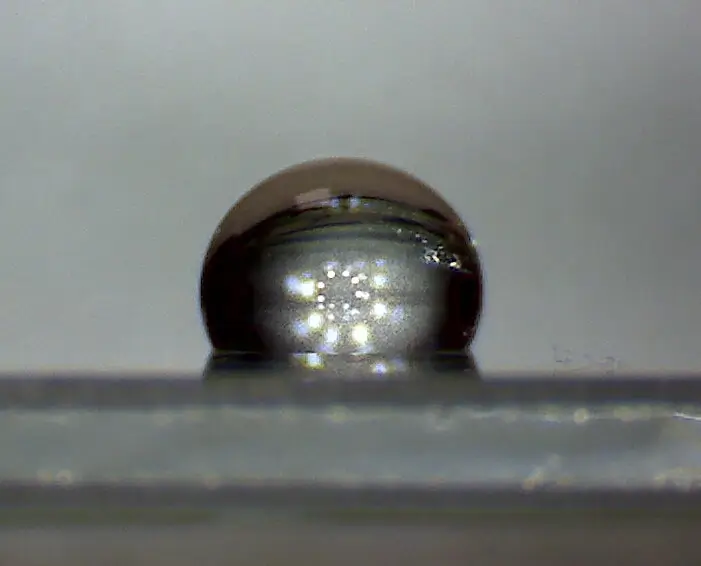
To understand how hydrophobic coatings work, it is useful to understand the relationship between water and surface energy.
When water comes into contact with a relatively high-energy surface, such as untreated glass, aluminium or polycarbonate, it is more likely to spread across it. This is sometimes referred to as ‘wetting’.
A hydrophobic coating reduces the surface energy of the material to which it is applied. The water therefore has a relatively weak attraction to the treated surface, while its molecules remain more strongly attracted to one another. The water contracts into individual droplets rather than spreading.
Hydrophobic coatings are primarily designed to repel water, but some coating technologies can also provide resistance to oils, grease and other contaminants. These are generally described as oleophobic coatings.
It is important to distinguish between hydrophobic and oleophobic performance. Hydrophobic coatings specifically describe surfaces designed to resist water. Where resistance to oil, grease, fingerprints or oily substances is also important, an oleophobic coating or combined hydrophobic/oleophobic treatment may be more appropriate.
The correct surface treatment should therefore be selected according to the liquids and contaminants that the finished component is likely to encounter. Performance will depend on the coating formulation, substrate and conditions of use.
Hydrophobic coatings can provide several important advantages for suitably selected components and applications:
The primary advantage of these coatings is their ability to reduce the tendency of water to spread across a treated surface.
By encouraging water to bead rather than form a continuous film, hydrophobic coatings can help manage exposure to rain, splashes, condensation and general moisture. This can be valuable for small optical and electronic components that operate outdoors or in environments where contact with water is possible.
Another potential advantage is the easier-cleaning behaviour associated with a hydrophobic surface.
Because water forms droplets, it can move across the surface more readily. Under suitable conditions, moving droplets may carry loose dirt and other particles with them. A treated surface may therefore be easier to clean and less prone to retaining water-related marks or light contamination.
Where fingerprints, oils or handling marks are a concern, an oleophobic property may also be beneficial. The level of performance depends on the coating selected and should be assessed against the actual cleaning and use requirements.
On lenses, windows and display cover surfaces, unwanted water droplets and residue can interfere with the user’s view or the operation of an optical component.
A suitably selected hydrophobic coating can help water move away from these surfaces rather than spreading across them. This can help maintain a clearer surface in damp or wet conditions. The coating must, however, be compatible with the optical substrate and any existing anti-reflective, hard or other functional coatings.
Repeated exposure to moisture and contamination can make components more difficult to maintain and may affect their appearance or performance over time.
A hydrophobic treatment can provide an additional functional surface layer by reducing the interaction between water and the underlying material. It should not be regarded as a substitute for a waterproof enclosure, seal or moisture barrier, but it can form part of a wider component-protection strategy.
Hydrophobic coatings are particularly relevant to compact components where water repellence, surface cleanliness and the visibility of an optical surface are important. Potential applications include:
Small optical lenses and camera windows are often exposed to changing environmental conditions, regular handling and surface contamination. This can include vehicle cameras, security cameras, inspection systems, machine-vision equipment and compact imaging devices.
Water droplets on a lens or protective window can obstruct the optical path and affect image quality. A suitable hydrophobic coating encourages water to bead and move away from the surface, helping to reduce water coverage and support clearer visibility.
The coating must be selected and applied with the optical requirements of the component in mind, including transparency, haze, reflectance and compatibility with any existing optical coating stack.
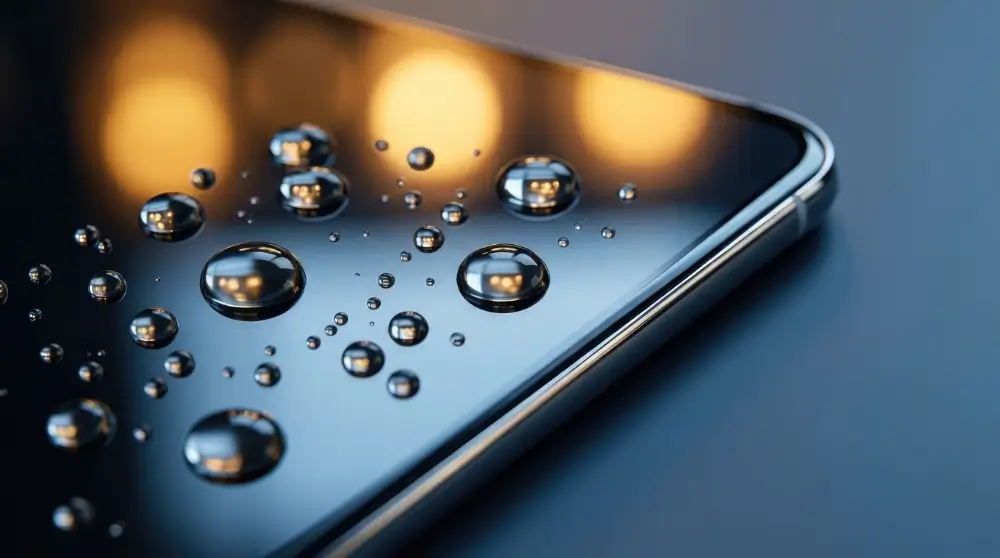
Compact displays and touchscreens are used in a wide range of products, including handheld navigation devices, portable instruments, control interfaces and specialist electronic equipment.
These displays may be handled frequently or used in environments where rain, splashes and condensation are possible. A hydrophobic coating on a suitable outer glass or plastic surface can help water bead rather than spread across the display, supporting clearer visibility and easier surface cleaning.
Where fingerprints and skin oils are also a concern, an oleophobic component to the coating may provide an additional benefit. The treatment needs to be compatible with the display’s surface material and any other functional coatings.
Modern vehicles increasingly incorporate compact optical and sensor components, including camera lenses, external sensing windows and other small transparent covers.
These components can be exposed to rain, road spray and dirt. Water droplets or residue on the outer surface may interfere with the view through a camera or sensor window. A hydrophobic coating can help reduce water spreading across the surface and make it easier for droplets and light contamination to move away.
Potential applications include camera cover lenses, compact optical sensor windows and other suitably sized transparent components used in automotive and transport systems. The finished component must be evaluated under its intended operating conditions.
Many medical and diagnostic products incorporate small glass or plastic windows, lenses, optical sensors and display components. These surfaces may need to remain clean and clearly visible during use.
Where the component design and material are suitable, a hydrophobic coating can help reduce water wetting and make the surface easier to maintain. Potential applications include optical windows in diagnostic equipment, sensor covers and compact display components.
For medical applications, the coating and finished component would need to be assessed for compatibility with the relevant cleaning agents, disinfection processes and any applicable regulatory requirements.
Portable industrial instruments, inspection devices and measurement equipment are often used in workshops, laboratories and outdoor environments where moisture and contamination can be difficult to avoid.
Hydrophobic coatings may be suitable for small display windows, optical sensors, inspection lenses and protective covers used on these products. By encouraging water to bead rather than spread, the treatment can help maintain a clearer surface and simplify routine cleaning.
The coating can be considered for individual components or selected parts within a larger assembly, subject to substrate compatibility, component dimensions and the required performance.
At Diamond Coatings, we work closely with our customers to understand their application, substrate and performance requirements and identify an appropriate surface coating solution.
Our focus is on precision coating of suitably sized components, including optical and display-related parts where a thin hydrophobic surface treatment can provide practical benefits. Each application needs to be considered individually, taking account of component dimensions and geometry, substrate material, existing coatings and the environment in which the finished product will be used. If you are considering hydrophobic coatings for lenses, small displays, optical windows, sensor covers or other compact components, contact us to discuss your requirements with our team.
Our Clearview Anti Reflective Screen Protector range is designed to reduce distracting reflections while maintaining excellent screen clarity.
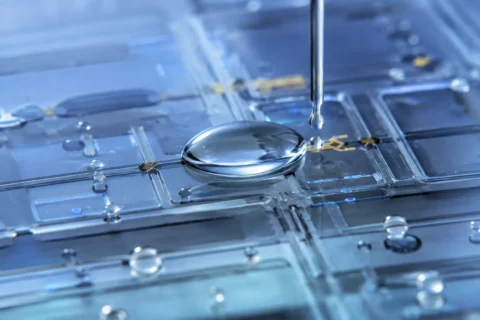
Diamond Coatings provides advanced ITO coating solutions engineered specifically for electro-wetting systems and microfluidic device applications.

A spacecraft operating in Low Earth Orbit (LEO) faces a unique and aggressive threat: atomic oxygen. We have developed a high-performance Atomic Oxygen Protective Coating engineered specifically for Low Earth Orbit applications.
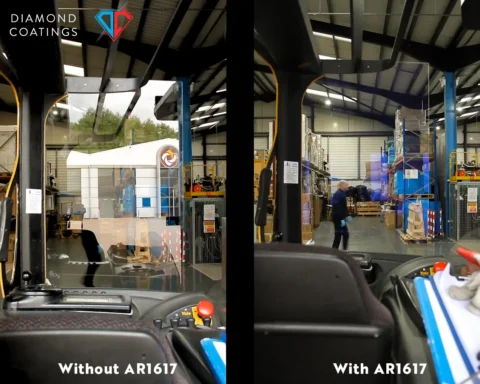
In busy warehouses, distribution centres and manufacturing facilities, forklift operators rely on clear, uninterrupted vision to carry out their work safely. One effective solution is the use of anti reflective film for forklifts.