Atomic Oxygen Protective Coating for Low Earth Orbit Applications
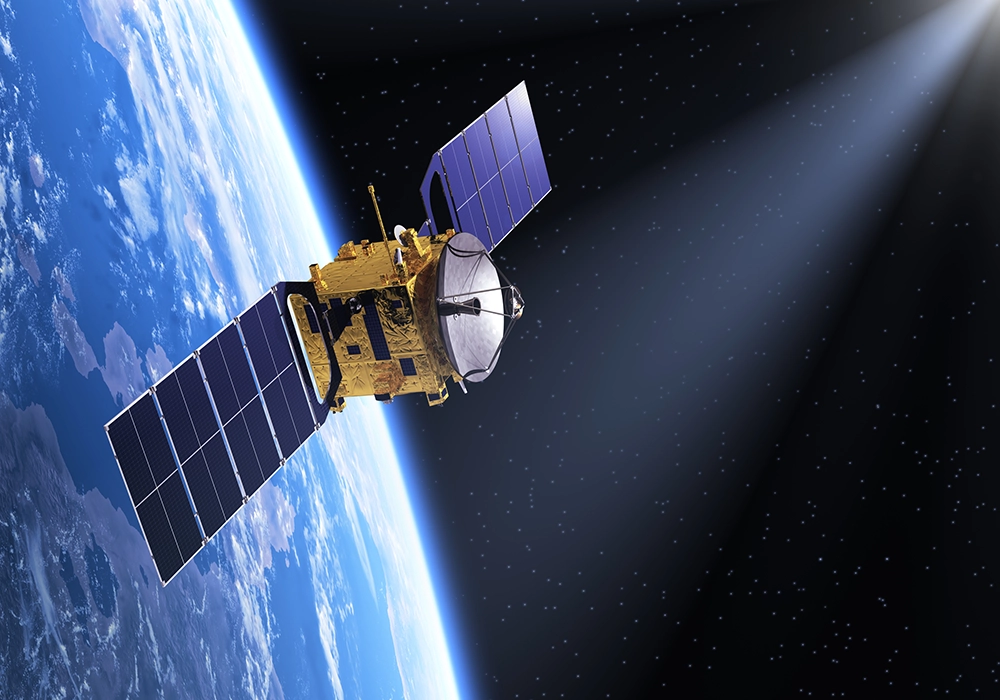
A spacecraft operating in Low Earth Orbit (LEO) faces a unique and aggressive threat: atomic oxygen. We have developed a high-performance Atomic Oxygen Protective Coating engineered specifically for Low Earth Orbit applications.
A spacecraft operating in Low Earth Orbit (LEO) faces a unique and aggressive threat: atomic oxygen. While invisible to the naked eye, atomic oxygen is one of the most destructive environmental factors affecting satellites, space stations and orbital instruments.
To safeguard mission-critical components, specialised protective coatings are required. We have developed an advanced Atomic Oxygen Protective Coating engineered to deliver long-term durability, optical clarity and chemical stability in the extreme conditions of space.
What Is Atomic Oxygen and Why Is It a Problem?
In Low Earth Orbit, high-energy ultraviolet radiation breaks apart molecular oxygen (O₂) into individual oxygen atoms. These single oxygen atoms are highly reactive. Unlike the oxygen we experience at ground level, atomic oxygen is chemically aggressive.
When a spacecraft travels at orbital velocities of around 7 to 8 kilometres per second, it continuously encounters streams of atomic oxygen. At these speeds, even sparse atmospheric particles cause measurable surface damage.
Atomic oxygen generally causes a surface reaction. It:
Continuously attacks exposed materials
Breaks chemical bonds
Oxidises polymers
Erodes advanced composites
Unlike traditional corrosion, atomic oxygen erosion is a persistent, high-energy interaction that gradually degrades surfaces exposed to the LEO environment.
The Effects of Atomic Oxygen Over Time
The impact of atomic oxygen exposure is cumulative. Over extended mission durations, erosion can significantly compromise spacecraft components.
Atomic oxygen erosion can:
Degrade structural and optical elements
Diminish surface transparency
Roughen protective coatings
Reduce mission lifespan and system reliability
Polymers such as polyimides, PMMA and polycarbonates are particularly vulnerable. Carbon-based materials are stripped at the molecular level as atomic oxygen reacts with their surface chemistry. Even advanced composite structures can experience surface recession over time.
For optical systems, the risk is especially critical. Surface erosion can scatter light, reduce transmission and compromise sensor accuracy. In spacecraft applications where precision and clarity are essential, such degradation is unacceptable.
We have developed a high-performance Atomic Oxygen Protective Coating engineered specifically for Low Earth Orbit applications. The coating is designed to form a dense, stable and optically clear barrier that shields underlying materials from AO erosion.
The result is a durable surface layer capable of delivering long-term performance in harsh orbital environments.
Unlike temporary solutions or sacrificial layers, this coating is engineered to maintain integrity throughout extended mission durations.
Key Advantages of Atomic Oxygen Protection Coating
Atomic Oxygen Resistance
The coating forms a dense, chemically inert barrier that prevents AO-induced oxidation and surface erosion. By isolating vulnerable substrates from direct atomic oxygen interaction, it significantly reduces material recession rates and structural degradation.
Optical Transparency
Many spacecraft systems rely on clear optical pathways. Viewing windows, sensor interfaces and optical housings must maintain high transmission with minimal distortion.
Our solution is optically transparent, making it ideal for:
Observation windows
Optical domes
Sensor windows
Instrument housings
Thermal and Chemical Stability
Low Earth Orbit subjects materials to extreme thermal cycling. Spacecraft surfaces may transition rapidly between intense solar heating and deep cold.
The Atomic Oxygen Protective Coating maintains structural and optical integrity across extreme temperature ranges and vacuum conditions. Its chemical stability ensures that protective performance does not degrade under prolonged exposure.
Excellent Adhesion to Substrates
Versatility is essential in spacecraft manufacturing. The coating bonds effectively to a range of substrates, including:
Glass
Quartz
Sapphire
Selective PMMA Types – Testing & approval required on some PMMA variants
Polycarbonates
Composite materials
Strong adhesion prevents delamination and ensures reliable long-term performance.
Low Outgassing and Contamination Resistance
Materials used in space must meet strict outgassing requirements to prevent contamination of sensitive instruments.
Our Atomic Oxygen Protection Coating is suitable for vacuum environments and optical instruments, offering low outgassing characteristics that align with aerospace standards.
Where Are Atomic Oxygen Protective Coatings Applied?
Atomic oxygen protection is required across multiple spacecraft components.
Viewing Windows and Optical Domes
Transparent observation panels and sensor windows must maintain clarity throughout the mission lifespan. Protective coatings prevent surface erosion that could otherwise reduce transmission and distort optical performance.
Composite Structures
Lightweight carbon fibre and polymer composites are widely used in spacecraft design. Applying an atomic oxygen protective coating helps preserve structural integrity while maintaining weight efficiency.
Thermal Protection Systems
Components exposed to both atomic oxygen and extreme thermal cycling benefit from a barrier layer that mitigates chemical attack while withstanding temperature variation.
Solar Array Covers and Instrument Housings
Solar panels and instrument enclosures are particularly vulnerable to surface degradation in Low Earth Orbit. Protective coatings extend service life and help maintain consistent performance.
Research-Driven Innovation at Diamond Coatings
We approach atomic oxygen protection through research-led development and close collaboration with industry stakeholders. We have worked in partnership with customers and organisations within the aerospace sector to develop a tested and reliable Atomic Oxygen Protection Coating.
Each coating solution is custom-engineered to meet mission-specific requirements. This ensures optimal transparency, durability and performance tailored to the operational profile of the spacecraft.
Rather than applying a generic surface treatment, we deliver engineered thin-film systems designed for specific orbital challenges.
Proven Expertise in Aerospace Coatings
Diamond Coatings brings decades of experience in vacuum deposition and multi-layer coating systems. We have established expertise in optical and conductive thin-film coatings for aerospace and defence applications.
Extending Mission Lifespan Through Advanced Protective Coatings
In Low Earth Orbit, atomic oxygen exposure is inevitable. Without protection, polymers and composites degrade, optical elements lose clarity and mission reliability is reduced.
By applying a specialised Atomic Oxygen Protective Coating, spacecraft manufacturers can:
Preserve structural integrity
Maintain optical transmission
Extend operational lifespan
Reduce the risk of premature component failure
We deliver protective coatings engineered to withstand the chemical and thermal realities of orbital environments. Through research-driven innovation and collaborative engineering, Diamond Coatings provide advanced solutions that protect critical aerospace components where performance matters most.
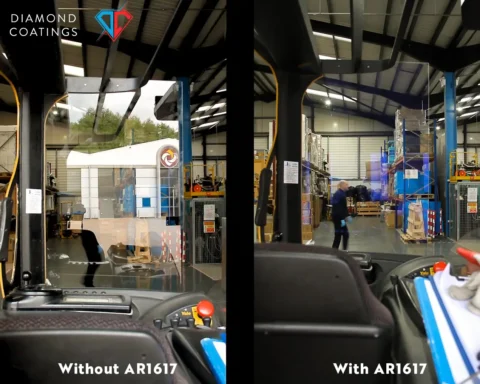
In busy warehouses, distribution centres and manufacturing facilities, forklift operators rely on clear, uninterrupted vision to carry out their work safely. One effective solution is the use of anti reflective film for forklifts.
In explosive ordnance disposal and blast-response operations, clarity of vision can directly influence safety. Operatives working in bomb disposal suits and blast suits operate under
In defence and security, optical performance is not just another technical specification, it is a mission-critical requirement. Gunsights, reflex sights, and red-dot optics must function
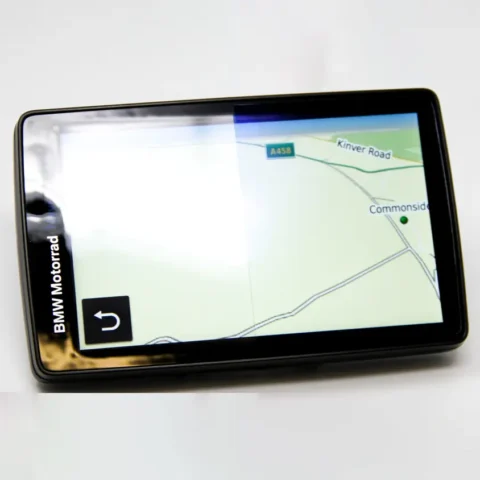
With the Garmin Nav 6 Anti-Reflective Film, you can say goodbye to shading a screen in harsh sunlight
Questions? Contact us?
Talk to an Expert Today
If you are interested in any of our products or services, please use the contact form or give us a call, we will be happy to discuss how we may be able to help you.
Diamond Coatings operate a state-of-the-art magnetron sputtering plant, equipped with clean rooms, from modern factory premises located in the heart of England, the Midlands. We provide a variety of products, namely Indium Tin Oxide (ITO), Anti-reflection (AR) coatings on plastic or glass, monolithic RFI shielding filters on plastic or glass, Touchscreens, capacitive or resistive, glass supply, mesh windows.